For years, the items you earned or purchased in Rainbow Six Siege were locked to your account. That rare Black Ice skin was a personal trophy, but its value was purely sentimental. Now, with the official launch of the Rainbow Six Marketplace, the in-game economy has completely changed. This platform allows players to buy, sell, and trade their cosmetics, turning digital items into tangible assets.
This shift is monumental for the Siege community. It provides a secure way for dedicated players to monetize their collection, for newcomers to acquire coveted items from past seasons, and for collectors to hunt down that one missing piece. Understanding how this market operates is key to making the most of it, whether your goal is profit or simply completing a set.
This guide will cover everything you need to navigate the marketplace successfully. You will learn:
- The mechanics of buying, selling, and trading.
- Strategies for valuing items and maximizing profit.
- How to stay safe and avoid common scams.
- The future of this exciting player-driven economy.
Quick Overview / AI Summary
The Rainbow Six Marketplace is an official web-based platform where Rainbow Six Siege players can securely buy, sell, and trade in-game cosmetic items like weapon skins, uniforms, and headgear using R6 Credits. It creates a player-driven economy, allowing users to monetize their collections and acquire items that are no longer available in the game store.
Table of Contents
- How the Rainbow Six Marketplace Works
- Types of Items Available on the Marketplace
- R6 Skins Trading Strategies
- Buying Rainbow Six Siege In-Game Items Safely
- Selling R6 Operators and Skins for Maximum Profit
- Pros and Cons of Using the Rainbow Six Marketplace
- Common Mistakes Players Make
- Comparing Rainbow Six Marketplace with Other Game Marketplaces
- Real-Life Experiences and Success Stories
- Future of the Rainbow Six Marketplace
- Conclusion
- FAQ
How the Rainbow Six Marketplace Works
Getting started on the marketplace is a straightforward process designed by Ubisoft to be secure and integrated with your existing game profile. You don’t create a new account; instead, you log in with the same Ubisoft account you use to play Rainbow Six Siege. This automatically links your in-game inventory to the marketplace.
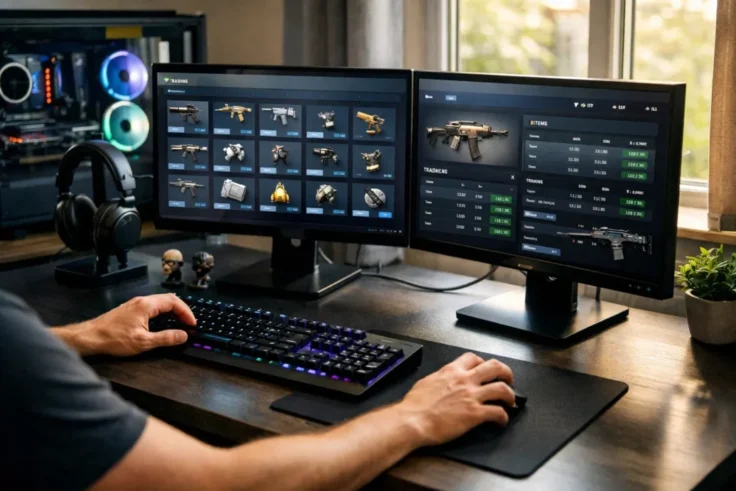
To list an item, you navigate to your inventory on the marketplace website, select the cosmetic you want to sell, and create a sell order. You set the price in R6 Credits you wish to receive. The platform then shows you the total listing price, which includes a 10% transaction fee. Once listed, your item is available for other players to purchase.
When buying, you can browse listings or search for a specific item. You place a buy order for the desired amount of R6 Credits. If a seller’s price matches your buy order, the transaction happens automatically. The item is transferred to your in-game inventory, and the R6 Credits (minus the fee) go to the seller.
- Login: Use your existing Ubisoft account.
- Listing: Set a price in R6 Credits for your items.
- Buying: Place buy orders or purchase items directly.
- Fees: A 10% transaction fee is applied to all sales.
- Currency: All transactions use R6 Credits, the game’s premium currency.
Types of Items Available on the Marketplace
The marketplace is a treasure trove of cosmetics, from common skins to items that haven’t been seen in years. The variety is vast, but items generally fall into specific categories, each with its own perceived value among the community.
Weapon skins are by far the most popular items. This includes everything from universally applicable skins like the iconic Black Ice to weapon-specific seasonal skins from past operations. Rarity plays a huge role here; an Epic or Legendary skin will naturally command a higher price than an Uncommon one.
You can also trade character-specific items like headgear and uniforms. This allows players to complete full sets for their favorite operators. Charms, the small trinkets that hang from your weapons, are also tradable. Many players seek out charms from specific esports events or limited-time challenges, making them valuable collector’s items.
- Weapon Skins: Includes universal, seasonal, and event-specific skins.
- Operator Cosmetics: Headgear and uniforms of all rarities.
- Charms: Collectible items from past events and seasons.
- Limited Editions: Items from old battle passes or special events are often the most valuable.
R6 Skins Trading Strategies
To succeed in R6 skins trading, you need to think like a stock trader. It’s not just about listing items; it’s about understanding the market’s pulse. The first step is to research an item’s value. Check the recent sales history on the marketplace to see what an item has sold for. This gives you a baseline for its current market price.
A popular strategy is “flipping.” This involves placing low buy orders for desirable items and waiting for someone to sell at that price. Once you acquire the item cheaply, you can relist it for a higher price to make a profit. This requires patience and a good understanding of what players want.
Another strategy is investing in event-specific items. When a new event like the Six Invitational is live, its exclusive skins might be relatively common. In my experience, holding onto these skins for a year or two can cause their value to skyrocket as they become rarer. Timing is everything; don’t sell a popular seasonal skin right when the season ends, as many others will be doing the same, driving the price down.
- Research: Always check sales history before buying or selling.
- Flipping: Buy low and sell high on popular items.
- Long-Term Holds: Invest in limited-time items and sell them later.
- Timing: Sell when demand is high and supply is low.
Buying Rainbow Six Siege In-Game Items Safely
The official Rainbow Six Marketplace is the only sanctioned platform for these transactions. The most important safety tip is to never use third-party websites that claim to offer trades or sales for real money. These are often scams designed to steal your account credentials or payment information.
When you buy Rainbow Six Siege items, always double-check that you are on the official Ubisoft marketplace URL. Phishing websites are designed to look identical to the real thing. Bookmark the correct page to avoid accidentally landing on a fake one through a misleading link.
Ubisoft’s system is designed to be secure. Since all transactions use R6 Credits within a closed ecosystem, you don’t need to enter credit card information on the marketplace itself. This minimizes risk. If a “seller” ever asks you to communicate or transact outside of the official platform, it is a major red flag for a scam.
- Use the Official Site: Only trade on the official Ubisoft marketplace.
- Avoid Third Parties: Never use external sites that ask for your login or real money.
- Beware of Phishing: Double-check the website URL before logging in.
- Stay On-Platform: Do not engage in trades or sales outside the marketplace interface.
Selling R6 Operators and Skins for Maximum Profit
To successfully sell R6 operators‘ cosmetics or weapon skins, you need to price them strategically. Simply listing an item at a high price and hoping for the best rarely works. Look at the current buy orders for your item. If the highest buy order is 500 R6 Credits, listing your item for 510 gives you a good chance of a quick sale.
Consider the timing of your sale. The best time to sell an item is often well after its initial release. For example, if you have a skin from a battle pass that ended two years ago, its rarity and value will be much higher than a skin from the current season.
Don’t underestimate the power of trends. If a professional player uses a specific skin during a major tournament, demand for that skin can temporarily spike. In my experience, listing the item right after the match can lead to a very profitable sale. Keep an eye on the community and esports scene to anticipate these trends.
- Competitive Pricing: Price your items just above the highest buy order for a faster sale.
- Sell Old Items: Rarity increases with time, so older items are generally more valuable.
- Follow Trends: Capitalize on sudden demand created by community influencers or esports events.
- Patience is Key: Sometimes, waiting for the right buyer is better than settling for a low price.
Pros and Cons of Using the Rainbow Six Marketplace
The marketplace is a fantastic addition to the game, but it’s important to have a balanced perspective. It’s a tool that can be incredibly rewarding but also has its own set of challenges.
Pros:
- Monetization: You can finally get value from duplicate items or skins you no longer use.
- Accessibility: It’s a great way to acquire rare or legacy items you missed out on.
- Collection Growth: It provides a clear path for collectors to complete specific sets.
Cons:
- Transaction Fees: The 10% fee means you don’t receive the full sale price.
- Price Fluctuation: The market is volatile, and the value of your items can drop unexpectedly.
- Scam Potential: While the platform is secure, users can still be tricked by phishing attempts outside of it.
Common Mistakes Players Make
Many newcomers to the Rainbow Six Marketplace make predictable mistakes. The most common is overpaying for an item due to “fear of missing out” (FOMO). Before making a large purchase, always research the item’s price history. What works best is setting a buy order at a reasonable price and being patient.
Another mistake is ignoring the 10% transaction fee when calculating potential profits. If you buy a skin for 900 credits and sell it for 1000, you haven’t made a profit. The 10% fee on the sale (100 credits) means you’ve only broken even.
Finally, poor account security can undermine all your trading efforts. Not using two-factor authentication (2FA) on your Ubisoft account is a massive risk. If your account is compromised, a hacker could potentially sell off all your valuable items before you even realize it.
- Overpaying: Not researching an item’s market value before buying.
- Ignoring Fees: Forgetting to factor in the 10% transaction fee.
- Weak Security: Failing to enable 2FA on your Ubisoft account.
- Impulsive Trading: Making emotional decisions rather than strategic ones.
Comparing Rainbow Six Marketplace with Other Game Marketplaces
The concept of a player-driven item market is not new. Games like CS:GO have had a thriving economy for over a decade. Compared to the Steam Community Market used for CS:GO, the R6 marketplace is more controlled. It uses an internal currency (R6 Credits) instead of real money, which simplifies regulation but limits the ability to “cash out.”
Valorant, another major tactical shooter, has a completely different model. It has no open marketplace. Its rotating daily store creates artificial scarcity and FOMO, encouraging direct purchases from the developer. The R6 model strikes a balance, allowing player trading while keeping the economy within Ubisoft’s ecosystem.
One area where the R6 marketplace can improve is in its data analytics tools. Third-party sites for the CS:GO market offer detailed graphs and price predictors. As the R6 market matures, I expect Ubisoft to either add more robust analytical features or allow API access for community developers to build them.
Real-Life Experiences and Success Stories
The marketplace is already creating success stories. I’ve seen players on Reddit talk about funding several battle passes just by selling off duplicate Black Ice skins they’ve accumulated over the years. One user reported selling a rare Glacier skin from Year 1 for enough R6 Credits to buy every new operator for the foreseeable future.
These stories highlight the value that was previously locked away in players’ inventories. It’s not just about making a profit; it’s about engagement. Collectors who have been playing for years are now seen as market veterans, their old inventories a source of highly sought-after relics. This adds a new layer of prestige and dedication to the game.
Future of the Rainbow Six Marketplace
The future of the Rainbow Six Marketplace looks bright. One likely evolution is deeper integration with the esports scene. We might see systems where you can buy skins directly from the marketplace that are being used by pro players in a live match, with a portion of the proceeds supporting the team.
There’s also speculation about expanding the types of items that can be traded. Could we one day see players trading digital copies of operators themselves, or perhaps unique charms awarded for completing specific in-game challenges?
As the market grows, security and anti-fraud measures will become even more sophisticated. Ubisoft will likely continue to refine the interface, add more detailed market statistics, and create a more seamless experience between the game client and the web platform, further solidifying its place as a core feature of the Rainbow Six Siege experience.
Conclusion
The Rainbow Six Marketplace has fundamentally transformed how we interact with our in-game items. It has created a vibrant, player-driven economy that rewards long-time players and offers new opportunities for collectors. By understanding the core mechanics of buying, selling, and trading, you can participate effectively and safely.
Remember that success in this market, whether for profit or collection, comes down to strategy and patience. Research prices, time your trades wisely, and always prioritize the security of your account. The marketplace is more than just a feature; it’s a new way to engage with the game we love.
- Trade Smart: Make informed decisions based on market data.
- Stay Secure: Use 2FA and only trade on the official platform.
- Be Patient: The best deals and sales often come to those who wait.
FAQ
What is the Rainbow Six Marketplace and how does it work?
It is an official web platform by Ubisoft where players can buy and sell in-game cosmetics like skins and charms using R6 Credits. You log in with your Ubisoft account, list items from your inventory, or place buy orders to purchase items from other players.
Is it safe to buy Rainbow Six Siege skins online?
Yes, it is safe as long as you use the official Rainbow Six Marketplace. The platform is secure and integrated with your Ubisoft account. Avoid all third-party websites, as they are likely scams.
How can I sell my R6 operators for maximum profit?
You cannot sell the operators themselves, but you can sell their cosmetic items (uniforms, headgear). To maximize profit, research the item’s sales history, sell older and rarer items, and time your sales to coincide with community trends or when supply is low.
Are there risks of scams in the marketplace?
Within the official marketplace, the risk is very low as transactions are automated. The primary risk comes from phishing scams, where fake websites trick you into entering your login details. Always verify you are on the official Ubisoft URL.
Can I trade items directly with other players?
No, the system does not support direct player-to-player trades. All transactions are mediated through buy and sell orders on the marketplace. This ensures that all exchanges are secure and standardized.
How do I know if a skin is rare or valuable?
An item’s value is determined by its rarity tier (e.g., Legendary), its age, and whether it was from a limited-time event. Check its sales history on the marketplace to see what other players are willing to pay for it.
What future updates might affect the marketplace?
Future updates could include deeper integration with esports events, the ability to trade more item types, and improved analytics tools. Game balance changes that make an operator more popular can also increase the value of their associated cosmetics.
About the Author